 Free quote
Free quote
Free quote
Wake County
Back 40 works in Knightdale 27545, including Widewaters, where flat open lots and dense clay make drainage and turf choice the main questions.
Knightdale sits on the eastern side of Wake County, and the land there is noticeably flatter than the rolling ground north and west of Raleigh. Back 40 covers 27545 including Widewaters. Flat terrain sounds like an advantage, and for mowing it is, but it removes the one thing that moves water off a property for free: slope.

A large share of Knightdale housing is recent, built on graded pads with thin topsoil over compacted subsoil. Aeration matters, mowing height matters, and expectations about how much a shallow root zone can survive in a dry August should be set honestly rather than blamed on the fertilizer.
New concrete comes with that housing too, and it behaves differently from the aged surfaces in older parts of the county. Fresh concrete needs time to cure before it gets washed or sealed, and it holds up to more pressure than a forty-year-old slab. Once it has been down a few seasons the shaded portions start growing the same green film everything here grows.
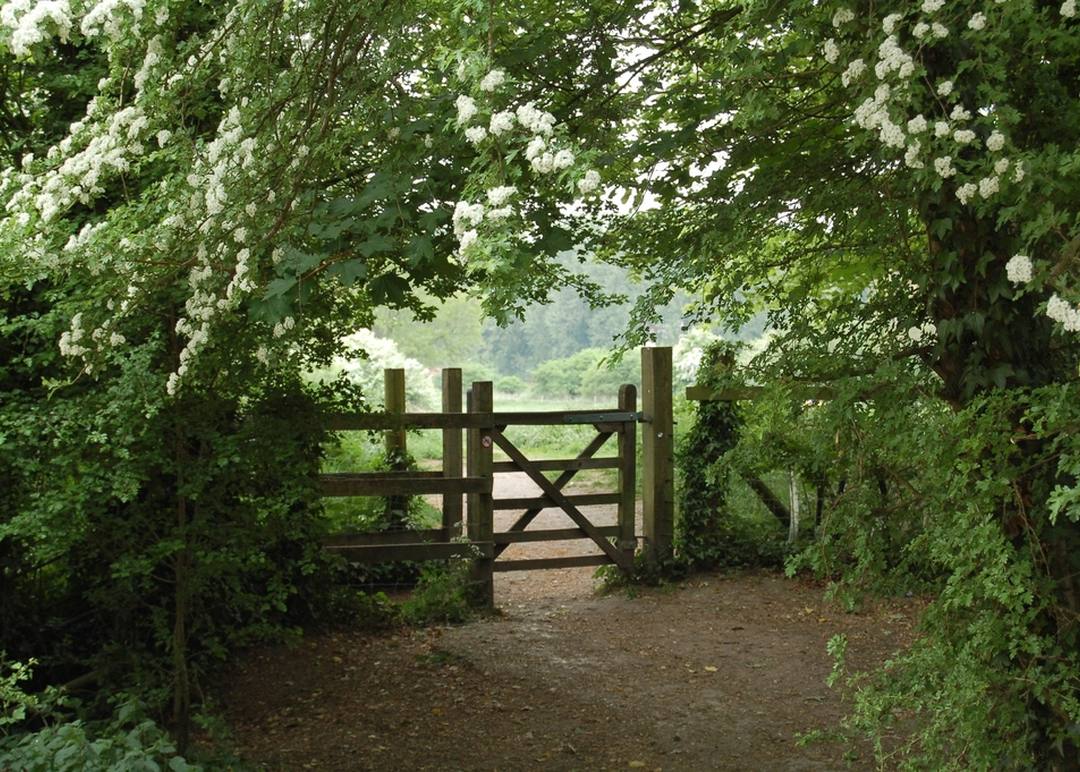
Flat, open lots with wide side yards make this an easy area for project work. A fence line can be laid out and dug without wrestling grade changes, deck footings hit consistent conditions, and material can usually be staged close to where it is going. Post depth still gets figured for clay that swells wet and shrinks dry.
The one caution on flat ground is timing. Digging post holes in saturated clay is unpleasant and produces a worse result, since wet clay smears into a sealed wall inside the hole and the spoil is unusable for backfill. On these lots that means waiting a few days after heavy rain rather than pushing through it.
Eastern Wake routes run on set days to keep drive time down. Call (720) 869-7552 to find out which day covers your street. Weekdays 7:00 AM to 6:00 PM, Saturdays 8:00 AM to 2:00 PM.
Services
Neighborhoods: Widewaters
Nearby
Questions
On a flat lot, water leaves by soaking in or by evaporating, and dense Piedmont clay is bad at the first. After a heavy summer storm you get sheeting across the yard, then standing water in any depression, then soft ground for days. The visible symptoms are familiar — moss taking over a shaded low corner, ruts left by anything that drove across while wet, mulch floating out of a bed, and a strip along the foundation that never fully dries.
Fixes are earthwork, not products. Shaping a shallow swale to carry water to a legal discharge point, correcting fall in the first several feet around the house, extending downspouts well past the bed line, and in some cases regrading a low area rather than topdressing it year after year.
Less than people assume, but it has to be continuous. Water will move across a very gentle grade as long as nothing interrupts it. What kills drainage on a flat lot is not the absence of slope so much as the presence of small obstructions: a raised bed edge, a patio poured level with the surrounding grade, a fence with a bottom rail near the ground, or a strip where soil has been built up over years of mulch.
That is why the fix is usually shaping rather than filling. Dropping soil into a wet low spot raises it temporarily, then it settles, and the water comes back to the same place. Cutting a shallow path that carries water to somewhere it can legally go solves it once.
Where the ground stays saturated long enough that shaping alone will not do it, a subsurface line to daylight is the next step, and where that discharges matters — pushing water onto a neighbor's flat lot is trading one problem for a different one.
Most Knightdale yards get strong sun for most of the day. Tall fescue is the default and will work, but it has no shade relief in July and needs fall overseeding to stay thick. Bermuda and zoysia are legitimate alternatives on these lots, since they want heat, sun and traffic and are more forgiving of compaction — accepting that they brown out through the winter. The choice is a real one here in a way it is not on a heavily shaded lot, where warm-season grass simply will not hold.
Because moss is a symptom, not a weed problem. It shows up where grass cannot compete, and the conditions that stop grass are usually some combination of shade, compaction, poor drainage and low soil fertility. On a flat Knightdale lot the corner behind the house, in shadow and at the bottom of what little grade exists, hits all four.
Killing the moss changes nothing. It comes back within a season because everything that favoured it is still true. What changes the outcome is fixing whatever condition is dominant: opening up light where that is possible, aerating to relieve compaction, and getting water to move away from that corner instead of sitting in it.
Sometimes the honest answer is that the spot will not grow good turf and should not be asked to. A shade bed, a mulched area or a stepping-stone path is a better outcome than reseeding the same square of ground every autumn.
After enough rain that the ground has not drained. On a flat lot the surface can stay soft for days once it is saturated, and running a machine across it leaves ruts pressed into clay that stay visible for a full season and hold water afterward, which makes the original problem worse.
The other one is the spring flush. When growth outruns a normal interval after a warm wet week, the right move is a tighter interval for a couple of weeks rather than one aggressive cut that scalps the lawn back into shape. Either way, a change to the schedule gets communicated rather than left to be noticed.
Get in touch
Call and talk to someone who does the work, or send the details and we'll get back to you.
Call (720) 869-7552