 Free quote
Free quote
Free quote
Lawn Care
Scheduled mowing, edging, trimming and hard-surface blow-down for Raleigh and Wake County lawns, with cutting heights set for clay soil and summer heat.
Lawn care from Back 40 means a repeating visit: the turf gets mowed, every hard edge gets cut in, string trimming handles what the deck cannot reach, and the drive, walk and porch get blown clean before the trailer leaves. It is quoted per property, because a flat quarter-acre in Knightdale and a sloped, tree-shaded lot off Glenwood are not the same job even at identical square footage.
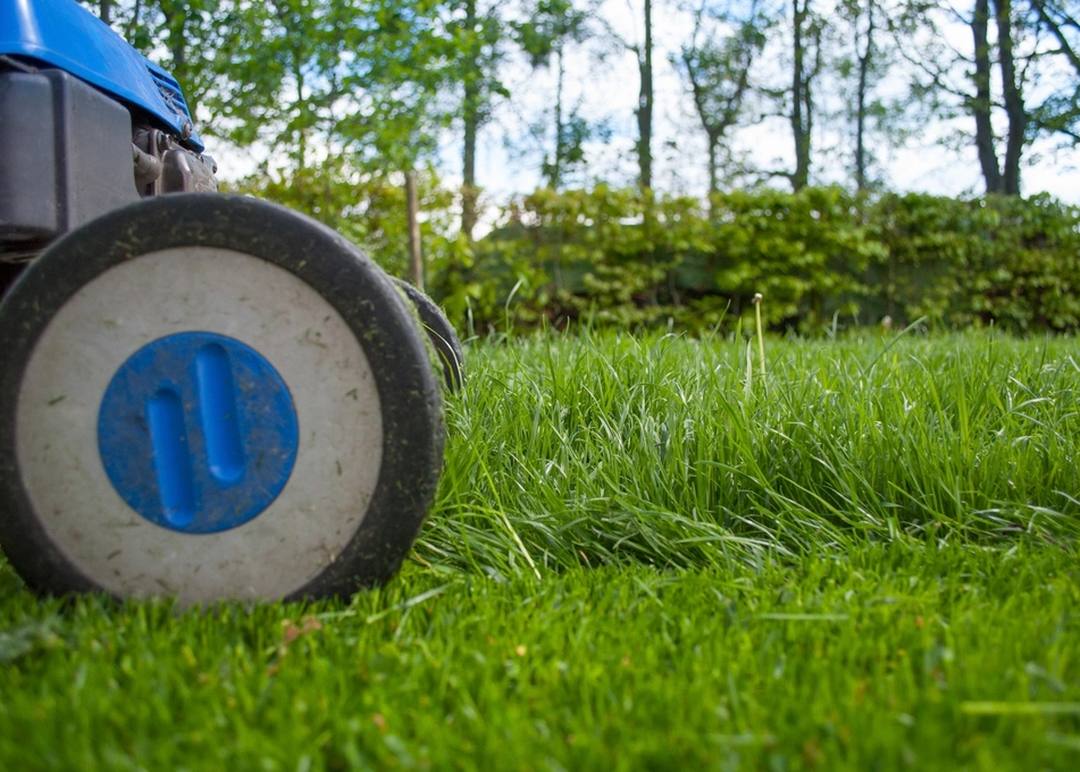
Late winter is cleanup, plus a first cut to take off winter-burnt tips before real growth starts. March through May is the flush: a cool-season lawn puts on most of its annual growth in that window, and the interval has to be tight enough that no single cut is scalping the lawn back into shape.
June is the turn. Growth slows, heat builds, and the height goes up rather than down. July and August are about survival — cutting dry, cutting high, and staying off saturated ground after an afternoon storm, because a machine on wet clay leaves ruts that are still visible the following spring.
September through early November is the second growth window, and it is the most productive stretch of the year for anything you want the turf to genuinely recover from. Late fall runs straight into leaf season, which in the older oak neighborhoods keeps going well past the point where the grass has stopped growing. Winter is intermittent: an occasional tidy-up on a mild stretch, and otherwise the season for project work.
Bermuda and zoysia want sun, heat and traffic, and they tolerate compacted clay better than fescue does. They also go fully dormant and brown from about first frost until the ground warms again, which some homeowners like and some do not.
The maintenance pattern inverts. Their tightest interval falls in July and August, they get cut lower than fescue, and they spread by runner, which means they will move into beds and across driveway edges unless those edges are kept. Cutting down hard in early spring to clear dormant thatch is normal practice on these lawns and would be damaging on a fescue lawn. It is worth knowing which grass a yard actually has before setting a schedule for it.
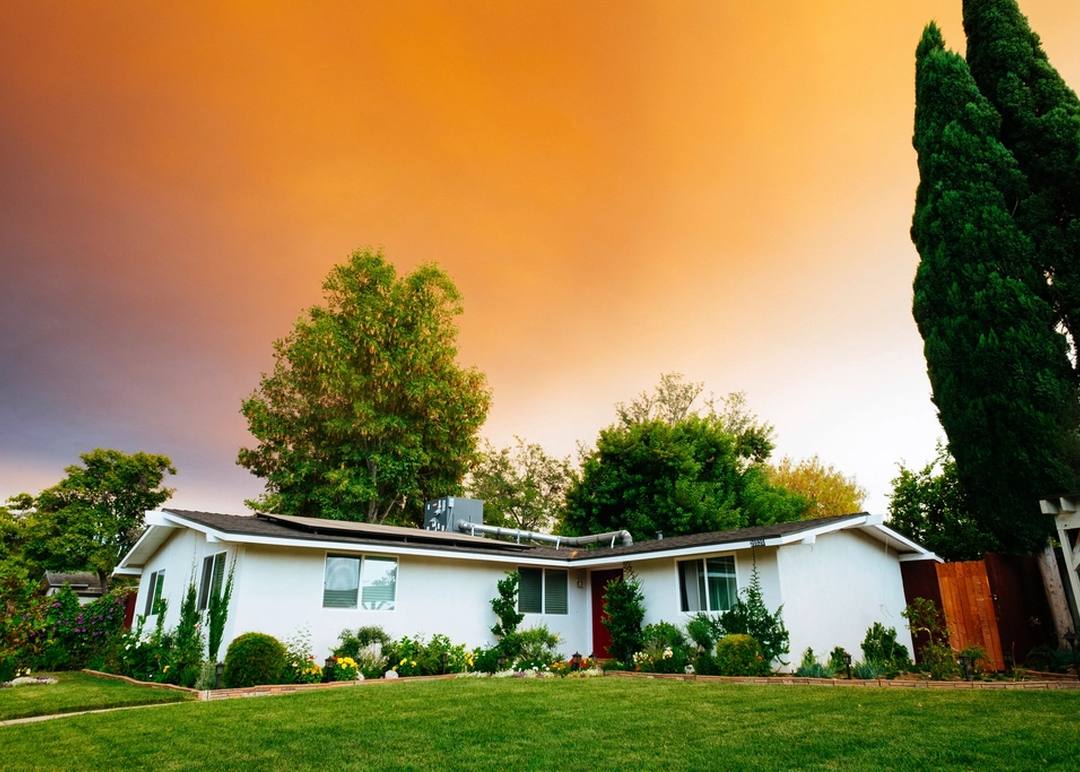
Most of it is the edges, not the grass. A clean line along the driveway and the curb, a defined bed edge, and hard surfaces blown off will make an average lawn look cared for. A thick lawn with soft edges and clippings across the walk will not.
Clippings stay out of the street and off storm drains. Trimming gets kept off the base of young trees, because a string trimmer against thin bark girdles a tree slowly enough that nobody connects the cause to the result.
Included
Typical range: Quoted per property
Coverage
What this job looks like in Raleigh specifically.
What this job looks like in Cary specifically.
What this job looks like in Apex specifically.
Questions
It depends on the grass and the month, not on a fixed calendar. Tall fescue, which is what most established Raleigh yards are, does its hardest growing in spring and again in fall. Through those stretches a weekly cut keeps you from removing too much blade at once. In the deep heat of July and August fescue slows down, thins, and sometimes goes off-color — mowing it aggressively then does more harm than leaving it alone. Bermuda and zoysia run the opposite schedule. They sulk in cool weather and then grow hard exactly when fescue is struggling, so a warm-season lawn often needs its tightest interval in midsummer.
Red clay compacts, drains poorly and heats up. A lawn cut short over compacted clay loses its shade on the soil surface, the ground temperature climbs, and shallow roots cook. Taller turf shades its own root zone and competes better with crabgrass. So the mower goes up in summer, not down. The other half of that equation is blade sharpness — a torn blade tip browns off and gives fungus an opening, and humid Carolina nights are already generous to fungus.
Because the conditions are perfect for fungus. Warm days, nights that stay warm and humid, and turf already stressed by heat is exactly the setup that disease wants. It usually shows up as irregular tan patches that expand outward, worst in the areas of the yard that stay wet longest.
The controllable parts are cultural rather than chemical. Mow when the grass is dry instead of at dawn. Keep blades sharp so leaf tips are cut rather than shredded. Avoid pushing nitrogen into a fescue lawn in midsummer, since soft new growth is the most vulnerable growth there is. Water early in the morning rather than in the evening, so the canopy is not sitting wet all night. Airflow matters too, which is one more reason an overgrown foundation bed pressed against the lawn edge is not purely a cosmetic issue.
Fall, and it is not a close call. Core aeration in early autumn pulls plugs out of the ground and opens channels through the compaction layer so water, air and roots have somewhere to go. Overseeding immediately after gives seed real contact with soil instead of dropping it onto a mat of thatch.
Spring seeding is the common mistake. Seed put down in April has to build a root system and then survive its first Piedmont summer with only a few weeks of growth behind it, and most of it does not make it. The same work done in fall gets two cool growing seasons — autumn and the following spring — before it faces real heat.
On compacted subdivision clay, one aeration does not transform anything. Repeated over several seasons, alongside returning clippings and keeping mowing height up, it is the closest thing there is to actually building soil depth under an existing lawn.
Clippings get returned to the lawn when they are short enough to fall through the canopy, because that is free nitrogen. When growth outruns the schedule after a wet week, they get dispersed rather than left in rows. Autumn is a different animal. Willow oaks and pin oaks drop over weeks, not in one weekend, and a mat of wet oak leaf left on fescue will smother it. Leaf handling gets built into the visit through that season instead of being treated as one annual cleanup.
Raleigh, Cary, Apex, Wake Forest, Garner, Holly Springs, Knightdale, Morrisville and Durham. Routes are grouped by town so visits stay on a predictable day. Call (720) 869-7552 to get on a schedule.
Get in touch
Call and talk to someone who does the work, or send the details and we'll get back to you.
Call (720) 869-7552