 Free quote
Free quote
Free quote
Lawn Care · Apex
Mowing and turf maintenance for Apex lawns in Scotts Mill, Haddon Hall and newer subdivisions built on shallow topsoil over compacted builder fill.
An Apex lawn is usually growing in less soil than it appears to be. Subdivision lots across 27502 and 27523 — Scotts Mill, Haddon Hall and the newer sections — were graded flat with heavy equipment, then finished with a thin layer of imported topsoil under sod. Roots hit compacted clay a couple of inches down and stop. Back 40 handles mowing, edging, trimming and blow-down in Apex with that shallow profile in mind.
Core aeration, repeated. Pulling plugs opens channels through the compaction layer so water, air and roots can move down instead of pooling on top. Done every fall for several years, along with overseeding and returning clippings to the surface, it slowly builds a deeper profile. There is no single-visit fix, and anyone promising one is selling something.
Mowing at a height set for the season, edging along drives, walks and bed lines, trimming around trees, posts and foundations, and blowing hard surfaces clean. Most Apex neighborhoods have covenants covering turf height and bed upkeep, so intervals get set to keep the property inside them.
Subdivision lots come with a specific set of trim obstacles: irrigation heads, low-voltage light fixtures, utility pedestals, mailbox posts, downspout extensions and young builder-planted trees. The trees are the ones that matter most, since a string trimmer against thin young bark does damage that shows up years later, so trimming stays off them and mulch rings do the job instead.
Local conditions
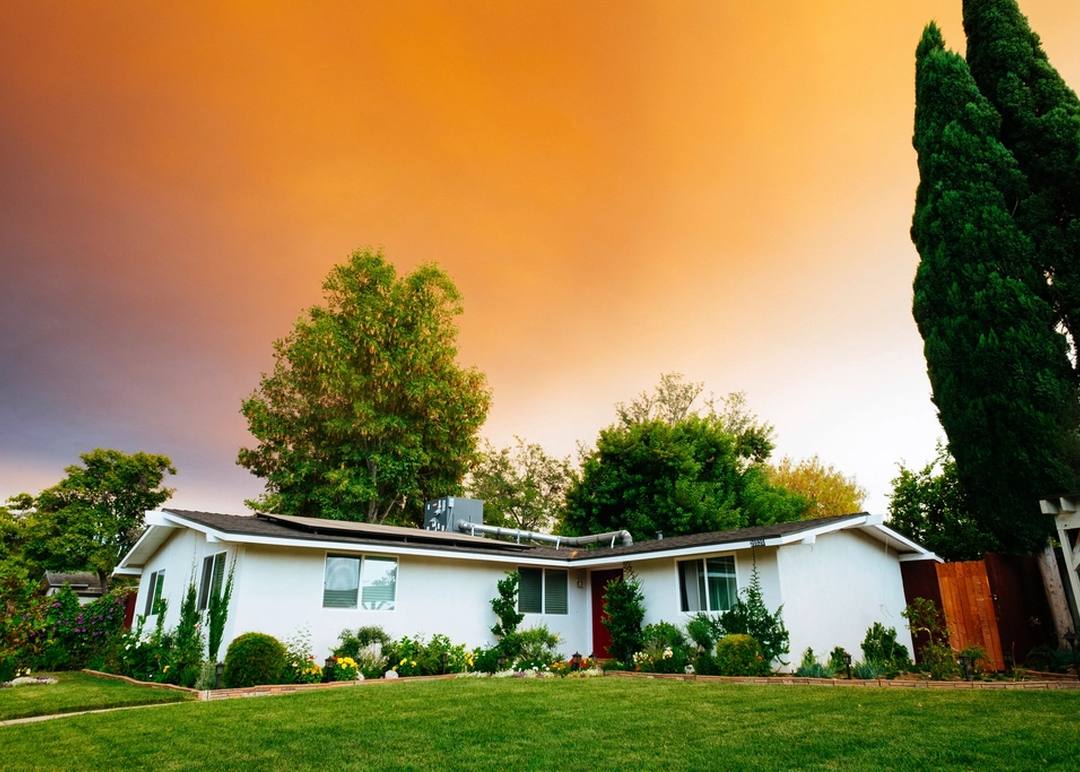
Apex subdivision lots are graded builder fill with only an inch or two of topsoil over compacted clay, so turf here has almost no root depth to fall back on.
Questions
Root depth. A lawn with two inches of usable soil holds almost no water reserve, so a week without rain in July takes it from green to straw far faster than an established lawn on undisturbed ground. Homeowners often assume it is a fertilizer or disease problem. Usually it is simply that there is nowhere for the roots to go.
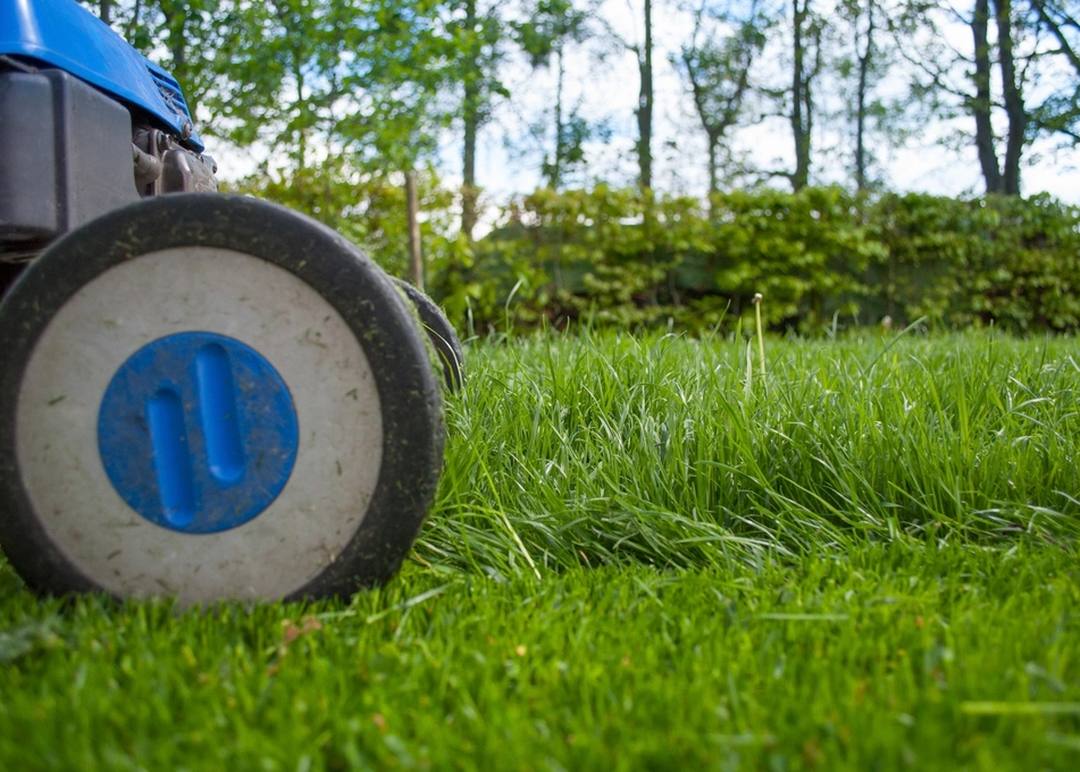
The mowing response is to cut high through the heat. Taller grass shades its own root zone and lowers soil temperature, which is worth more on compacted fill than any product. Blades stay sharp, because a torn tip loses moisture and browns out, and humid Piedmont nights are already hard on stressed turf.
Because fill depth is not uniform across a graded lot. The pad was cut in one place and built up in another, trenches were dug for utilities and backfilled loose, and the topsoil layer spread over the finished grade ended up thicker in some spots than others.
The result is a lawn that looks even in April and then browns out in exactly the same patches every summer. Those patches are usually the thinnest soil, the highest point of a subtle crown, or ground that was compacted hardest by equipment traffic during construction.
Reading that pattern is useful, because it says where the effort belongs. There is no benefit in treating a whole lawn for a problem confined to two strips, and there is no product that adds soil depth to those strips.
Newly laid sod arrives with its own soil layer, and until roots push through into the ground below, the lawn is essentially a rug. Deep, infrequent watering encourages that crossing; light daily sprinkling discourages it. Early cuts stay high, and no mower goes on soft new sod at all, since ruts pressed into fill soil stay visible for years.
Yes, but the sequence matters more than the seed. Seed dropped onto compacted ground, or onto a mat of thatch, mostly germinates and then dies for the same reason the lawn thinned in the first place. Seed dropped into fresh aeration holes has soil contact, moisture and a channel to grow into.
Autumn is the window, so that new grass gets a cool season to establish, a winter to root, and a spring to thicken before it meets its first Piedmont July. Spring seeding on a shallow Apex lot is the least likely version to survive, because it gets a few weeks of growth and then the heat arrives.
Where overseeding keeps failing in the same spot year after year, the useful question is what is different about that spot — shade, drainage, buried construction debris — rather than whether to buy more seed.
After heavy rain. Compacted fill sheds water slowly and stays soft at the surface, and running a machine over saturated ground on these lots leaves ruts that outlast the season. When a route slides a day for that reason, you hear about it rather than finding out from the mailbox.
Ask for an Apex quote at (720) 869-7552. Saturday hours run to 2:00 PM.
Get in touch
Call and talk to someone who does the work, or send the details and we'll get back to you.
Call (720) 869-7552